
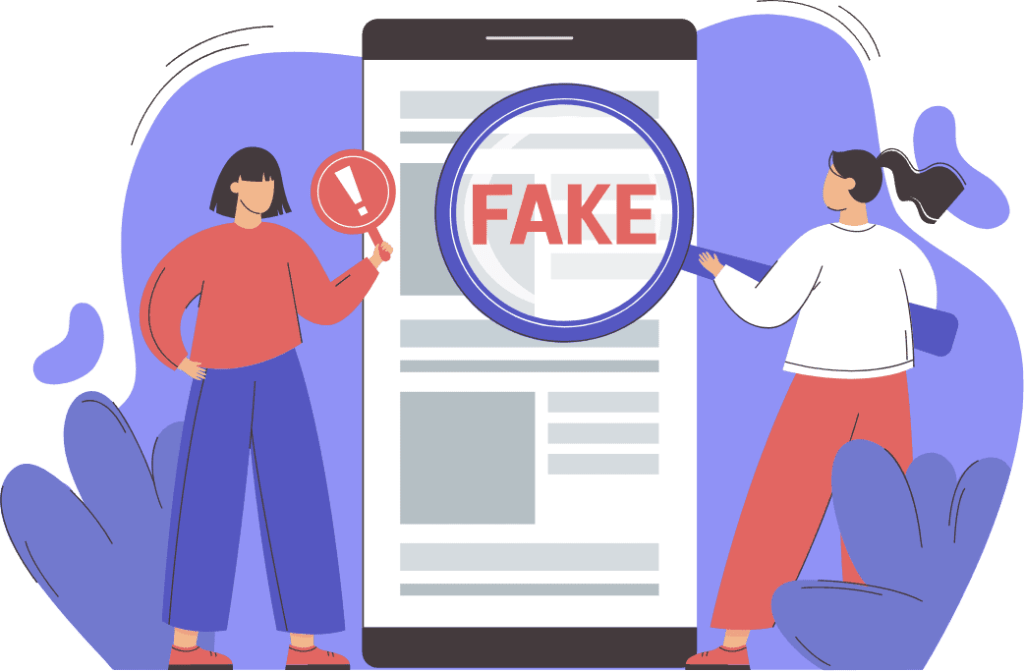
Recently, social media platforms are being challenged with balancing the use of their platforms as an instrument of free speech and a responsibility to slow the spread of misinformation. With the power to spread false news faster than ever before due to the emergence of modern technology focused on providing direct engagement with information, these platforms have become a frontline battleground in the fight against misinformation.
BUT HOW?
For today’s entry, let’s take a byte of the measures that Facebook and Twitter have taken to address this issue, and the implications for the future of online discourse. From labeling posts that contain false claims to partnering with media organizations to provide real-time updates on the election results, these platforms have taken steps to ensure that users are informed of the accuracy of the information that they are seeing.
So where do we begin?
Flashback to 2016 where the term misinformation and wider utilized phrase “fake news” became house hold terms in pop culture. At that time, then presidential hopeful, Donald Trump, coined the phrase in his election to describe information that he deemed false attacks on his policies and him personally. While this trend of defense caught on, spearheaded by mainstream media platforms, those who shared these radical yet opinionated views, began utilizing their own platforms to carry these messages.
Trump was able use Twitter as a powerful tool to get elected. He used it to communicate directly with his supporters, to spread his message, and to spread misinformation. At the time, Twitter was a relatively new platform and President Trump was one of the first politicians to use it to his advantage. He used it to bypass the mainstream media, to reach people directly and to spread his message of populism.
*Insert Picture of Misinformation tweet by President trump*
He also used the platform to spread misinformation. For example, he tweeted false claims about the number of illegal immigrants in the U.S. and about potential voter fraud. He also made false claims about the Obama administration’s record on job creation.
President Trump was able to use Twitter to his advantage in a way that no other politician had done before. He was able to reach millions of people directly, to spread his messages and to spread misinformation. It was a key factor in his election in 2016 and it will likely be a key factor in future elections.
Now I won’t bore you with a history lesson but flash forward to the next election. As the last election in 2020 came to a close, social media platforms like Facebook and Twitter were met with finally taking up the challenge of curbing the spread of misinformation. Twitter had become a stomping ground urging people to rise up against the “stolen election,” as President Trump called it. Facebook on the other hand was being inundated with articles and posts spreading lies about stollen ballets, etc… highlighting the fragility of a democratic process.
In response to this, both platforms have implemented new rules and regulations to combat the issue. In this blog, we will take a look at the measures that Facebook and Twitter have taken to address the issue of misinformation, and the implications for the future of online discourse.
They even banned former President Trump for spreading misinformation that led to violence. However, that’s a story for a different day.
Sor how are they fighting back now?
Facebook has taken a multi-pronged approach to address the issue of misinformation surrounding the 2020 election. First, they have implemented new policies that aim to reduce the spread of false information by limiting its reach. This includes the labeling of posts that contain false claims, as well as flagging posts that have been flagged as false by independent fact-checkers. In addition, Facebook has stepped up its efforts to remove deceptive content such as deepfakes and manipulated photos and videos.
They have also taken steps to ensure that users are informed of the accuracy of the information that they are seeing. This includes providing additional context to posts that contain disputed claims and linking to authoritative sources in order to help users better understand the accuracy of the information. Facebook has also partnered with media organizations such as the Associated Press to provide real-time updates on the election results.
Twitter has also taken steps to address the issue of misinformation surrounding the 2020 election. First, they have implemented a series of rules and policies that aim to prevent the spread of false information. This includes labeling tweets that contain false claims and suspending accounts that repeatedly spread false information. Twitter has also taken steps to limit the reach of tweets containing false information by reducing their visibility in the timeline and search results.
In addition, Twitter has partnered with media organizations such as The Washington Post and Reuters to provide real-time updates on the election results. They have also implemented a series of measures to ensure that users are informed of the accuracy of the information that they are seeing. This includes providing additional context to tweets that contain disputed claims and linking to authoritative sources in order to help users better understand the accuracy of the information.

Overall, Facebook and Twitter have taken steps to address the issue of misinformation surrounding the 2020 election. While it is still too early to tell if these measures will be effective, they are a positive step towards ensuring that users are informed of the accuracy of the information that they are seeing. By limiting the reach of false information and providing additional context to disputed claims, these platforms are helping to ensure that users are able to make informed decisions about what they see online.
So how can they do better?
Social media platforms have become a go-to source for news and information for many of us. Unfortunately, these platforms are now the leading breeding ground for the spread of misinformation, leaving users with no easy way to distinguish between fact and fiction.
In order to do an even better job of combating misinformation, platforms, the ones in our post here, Facebook and Twitter, should take a more proactive approach. This could include introducing new algorithms that can detect and flag posts that contain false information, as well as making it easier for users to report false information. Additionally, they could implement measures to help users differentiate between reliable news sources and unreliable ones, such as labeling posts from verified sources.
Furthermore, they could also introduce educational initiatives to help users become more informed about the latest events and news. This could include providing users with links to reliable news outlets and offering educational materials about how to spot fake news. By taking these steps, Facebook and Twitter could help ensure that users are better equipped to identify and avoid false information.
All in all, the war for combating misinformation has just begun. Social media is the frontline. and with the right strategies and initiatives, it will hopefully become a more reliable source of information.
 MIke's Info Bytes Blog
Leave a comment